Norske Lakseelver
Norges Jeger- og Fiskerforbund

Pocket guide

Salmon recognition

Norsk

Wild salmon in the river

Newly arrived wild salmon

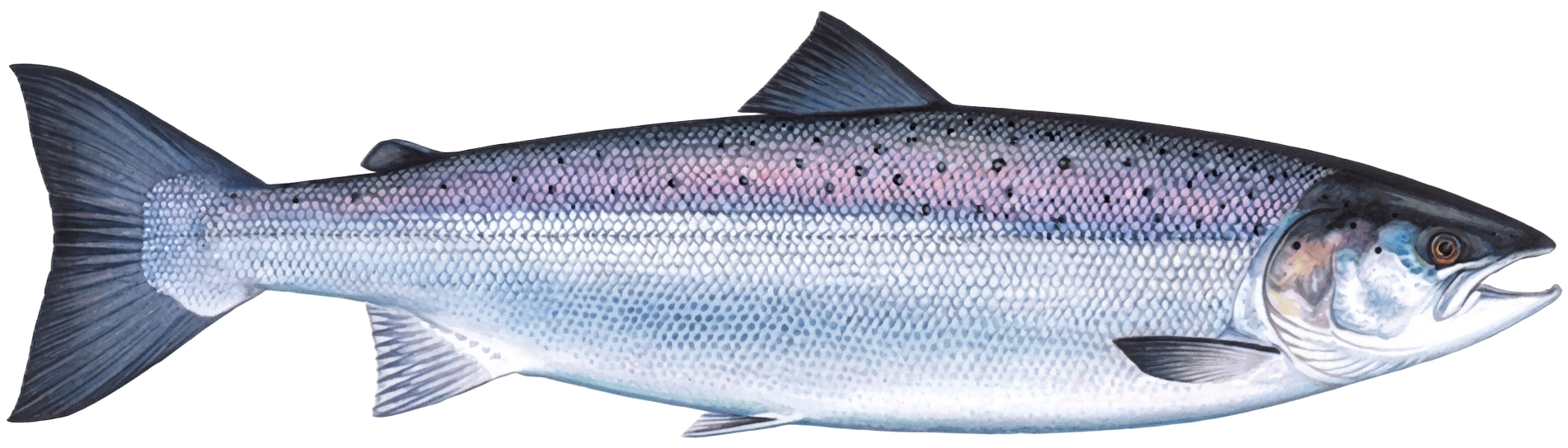
Newly arrived salmon

Fresh from the sea

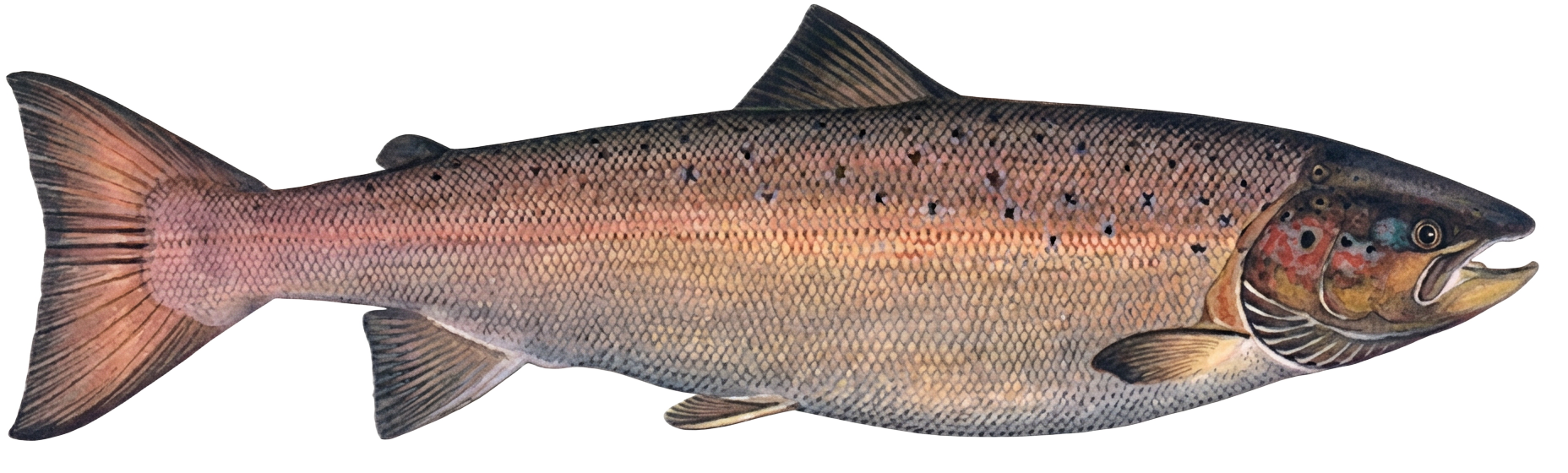
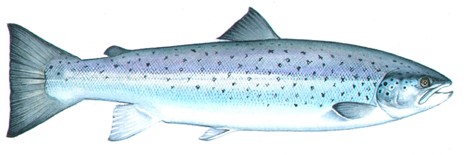
Salmon that have just arrived from the sea have a silvery skin and are in good condition. The scales are loose and the fish can easily be injured. Males can have a kype; otherwise they look like the females. Sea lice will normally fall off after a couple of days in the river.

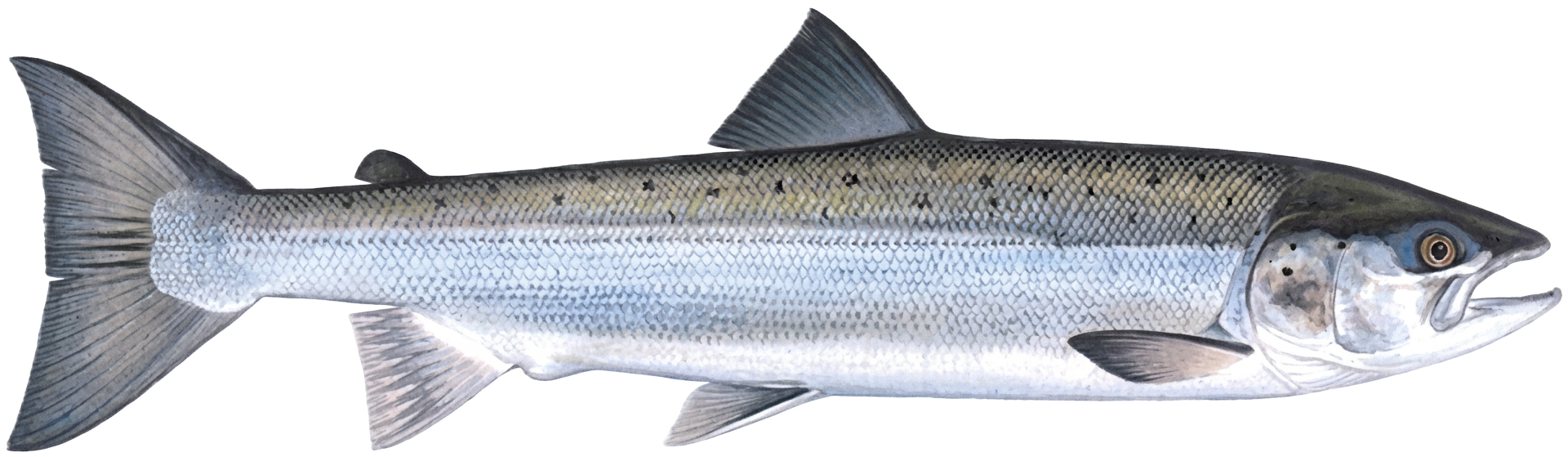
Kelt — spawned salmon

Kelt

Protected — must be released

A salmon which has spawned last fall and spent the winter in the river. Kelts are thin but can regain their silvery appearance and are sometimes mistaken for fresh springers. They must always be released unharmed so they can return to spawn again in 1–3 years.

After a while in the river

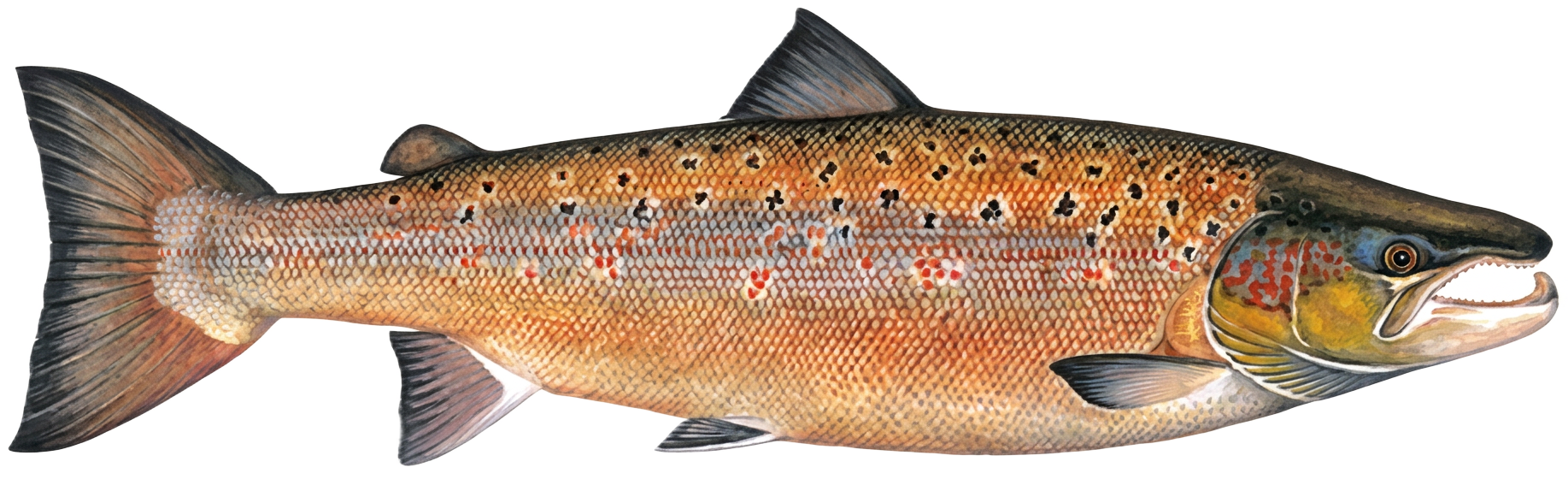
Male salmon with spawning colours

Male salmon

The spawning colours start to appear, to a varying extent. The skin becomes thicker and the scales sit well. The fully developed kype is used in fights with other males and to impress females.

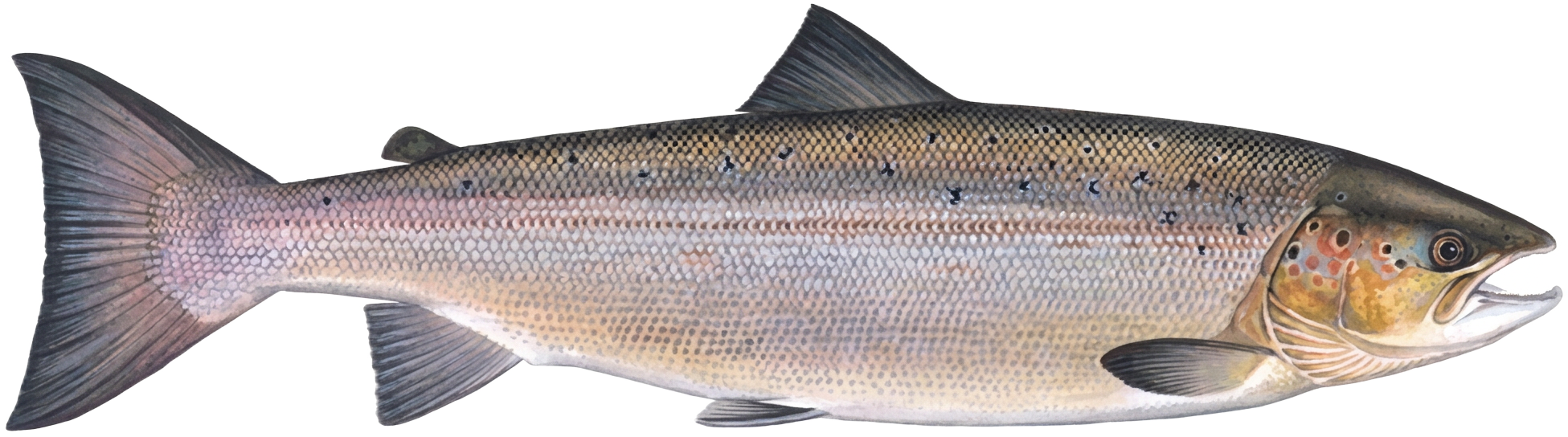
Female salmon

Female salmon

Her sides become less silvery and her spawning colours appear, but they are less obvious than the males. As the season progresses the female's head darkens. Females do not grow the same kype as the males.

Ready to spawn

Male salmon ready to spawn

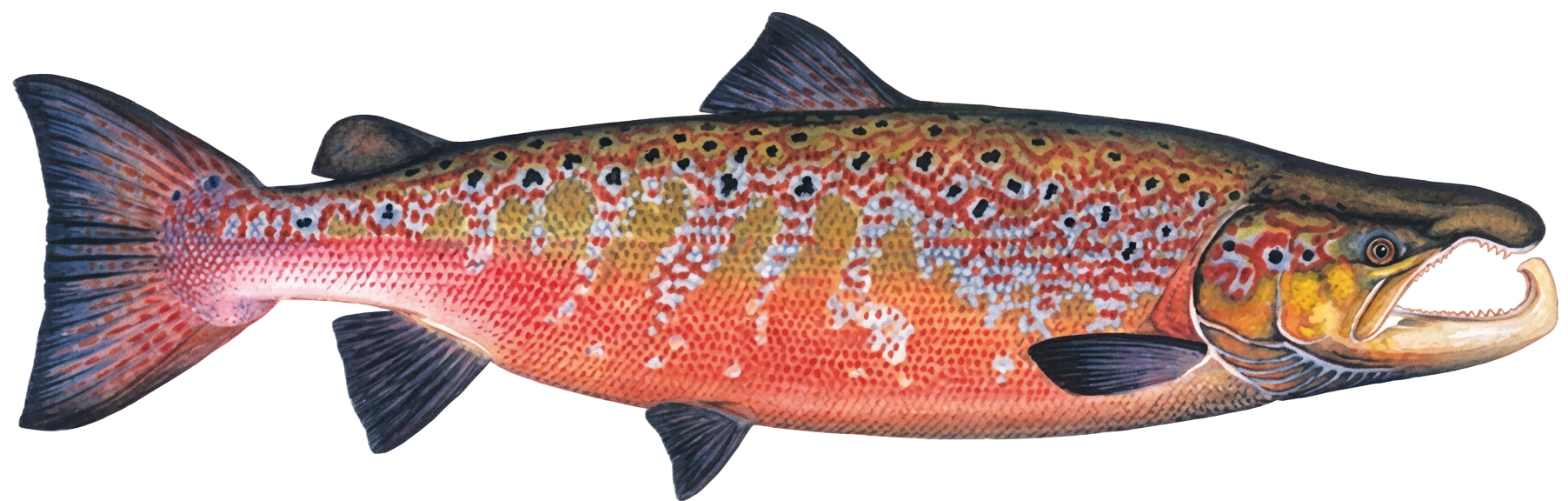
Male — ready to spawn

The spawning colours are more prominent, but there is a lot of variation. The skin becomes thicker and the scales sit well. The salmon doesn't eat while it's in the river, although preparing for spawning is quite energy draining. Spawning salmon are not suitable as food, and are protected in many rivers.

Female salmon ready to spawn

Female — ready to spawn

As the roe develops toward spawning, the female's abdomen swells and becomes softer. The sides darken. She uses the energy to produce roe, so the closer to spawning, the less edible the fish is. Spawning salmon are not suitable as food, and are protected in many rivers.

Other salmonids

Sea trout

Sea trout

The brown trout that migrate from rivers and creeks into the sea to graze. A newly arrived sea trout can look similar to a fresh salmon, but it has several black spots below the lateral line, the tail wrist is thicker, and the caudal fin is straight. Very good to eat.

Arctic charr

Arctic charr

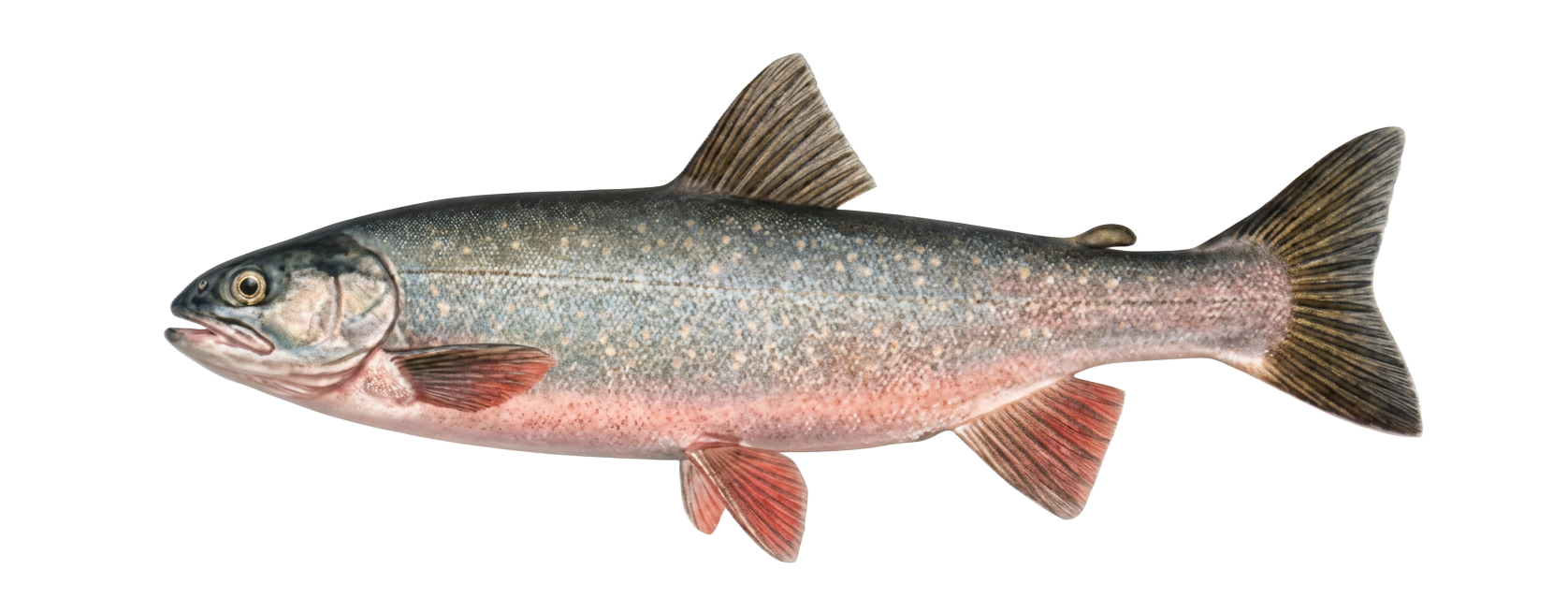
Charr that migrate from rivers into the sea to graze in summer. They stay in the sea for 30–50 days. Newly arrived charr are very good to eat. Before spawning, the abdomen takes on a deep red colour.

Pink salmon

Pink salmon

Invasive species

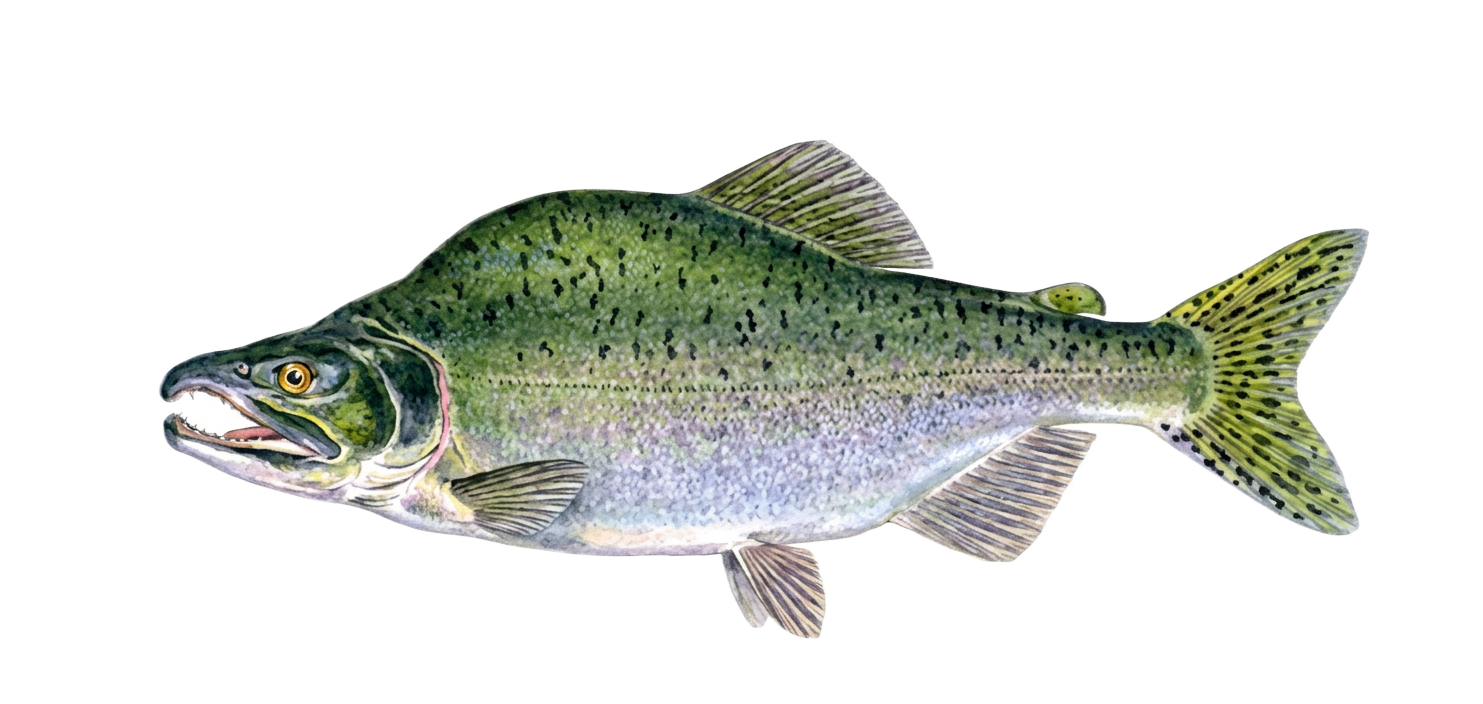
Pink salmon is an introduced species, unwanted in Norway. A newly arrived pink salmon resembles a fresh wild salmon, but has a black mouth and spots on the tail. Males develop the characteristic hump, and the flesh quickly deteriorates. All pink salmon must be killed.

Parr and smolt

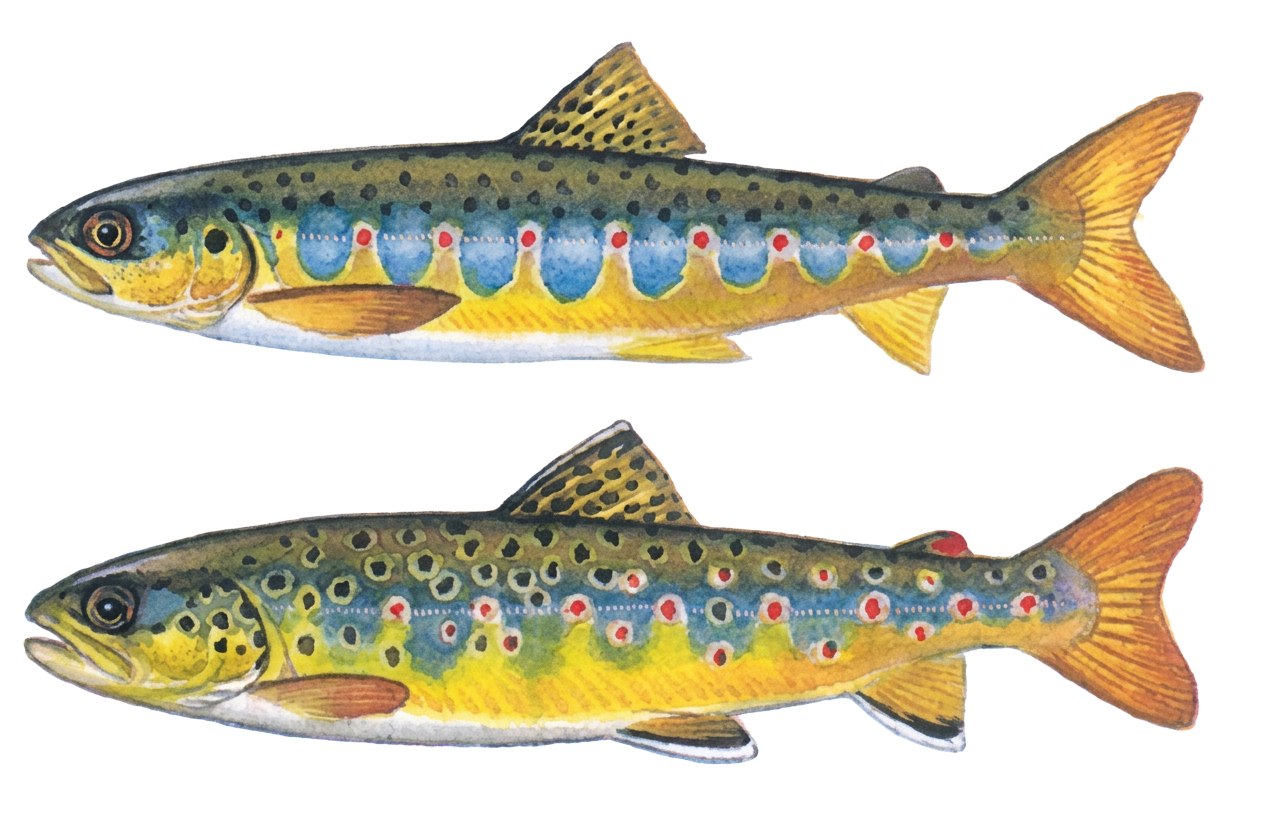
Comparison of salmon and sea trout parr

Salmon or sea trout parr?

Young salmon and sea trout staying in the river are called parr, before they develop bright silvery flanks and migrate to the sea as smolt. The salmon parr has a more streamlined body, longer pectoral fins, a deeply forked tail, no red spots on the adipose fin and fewer (none) spots on the gill covers.

Wild, farmed or sea trout?

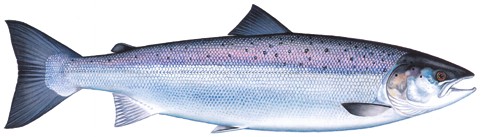
Wild salmonWild salmon
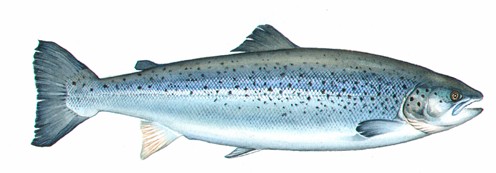
Farmed salmonFarmed salmon
Sea troutSea trout

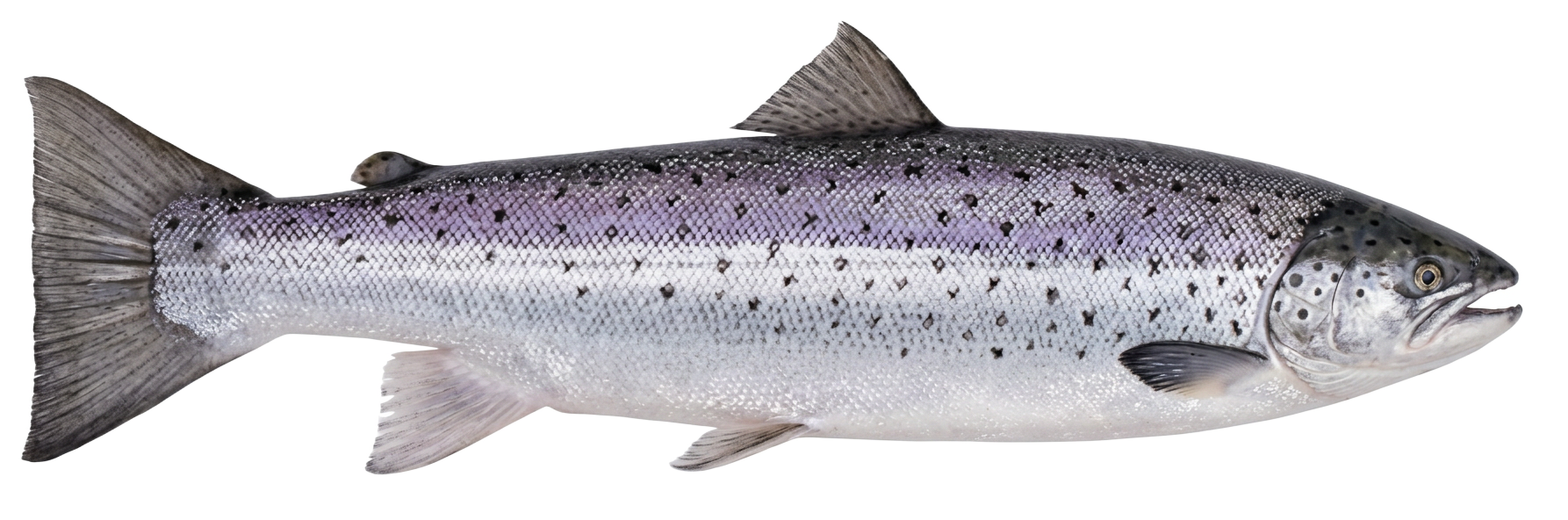
The wild salmon's tail is curved inwards, the tail root is narrow, the fin bone structure is straight, and there are rarely spots below the lateral line.

Farmed salmon also have a narrow tail root, but the tail is usually straight. The fin bones are often grown together and spots below the lateral line are common. All farmed salmon must be killed. Take a scale sample and report it to the authorities and the local river management. Report escaped farmed salmon to the Norwegian Directorate of Fisheries via their website or by calling +47 55 23 83 36.

The sea trout's tail is straight with several spots below the lateral line, but the bone structure is straight and the tail root is wide.


Catch and release

Salmon held gently in the water

Do not lift the fish out of the water

93%
of released salmon survive
NINA — 650 fish, 7 rivers
18°C
be extra careful above this
water temperature

How to catch and release

  • Use barbless hooks and strong leaders so you can land the fish quickly.
  • Have a large, fine-meshed, knotless net available.
  • Find a landing site with no large rocks or obstacles.
  • Use a hook releaser or pliers to remove the hook quickly.
  • Measure the length of the fish so you can estimate the weight when reporting.
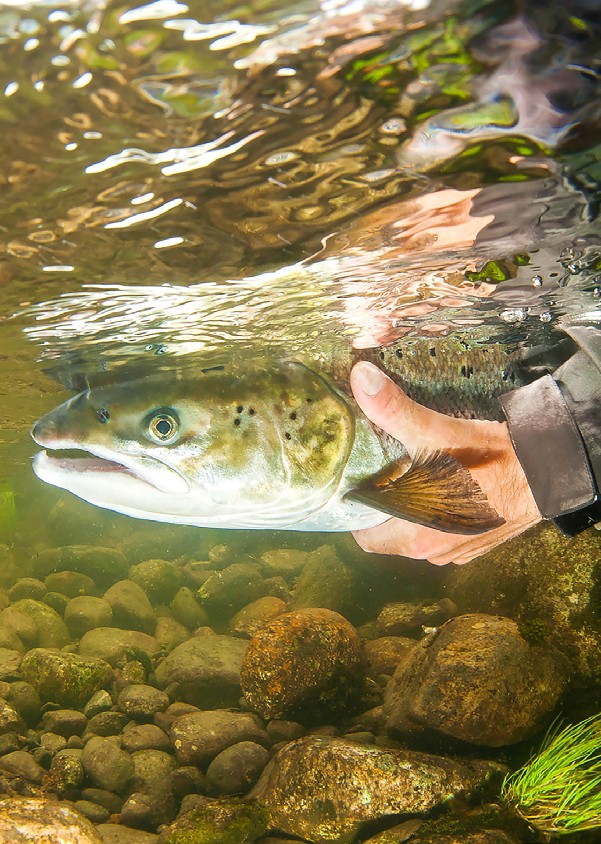
  • Keep the fish upright — one hand around the tail, one under the belly — until it swims away on its own.